Finding Parking on Walk-In Tracts
Every walk-in morning starts with the least romantic decision of the day: where to leave the truck. Get it right and nobody notices. You’re just one more pickup on a gravel shoulder with a dog box and a thermos. Get it wrong and you’re the guy who parked in a field approach the morning the combine needed it, and the landowner’s next phone call is to the agency asking how to get out of the program. Every walk-in acre is on loan. Where you park is the first thing a landowner sees of you.
This page covers what the seven-state footprint (South Dakota, Nebraska, Kansas, Iowa, North Dakota, Minnesota, and Montana) actually says about vehicles and parking on walk-in ground. Where an agency is specific, we quote it. Where it is silent, we say so and send you to the signs. Pair it with GPS and Offline Maps for Walk-In Days, How to Read a Walk-In Map, Managing Pressure on Public Pheasant Land, Walk-In Access Explained, South Dakota Walk-In Guide, Nebraska Public Access Atlas Tips, Kansas WIHA Pheasant Guide, Minnesota WIA Validation Guide, and North Dakota PLOTS First-Week Rules.
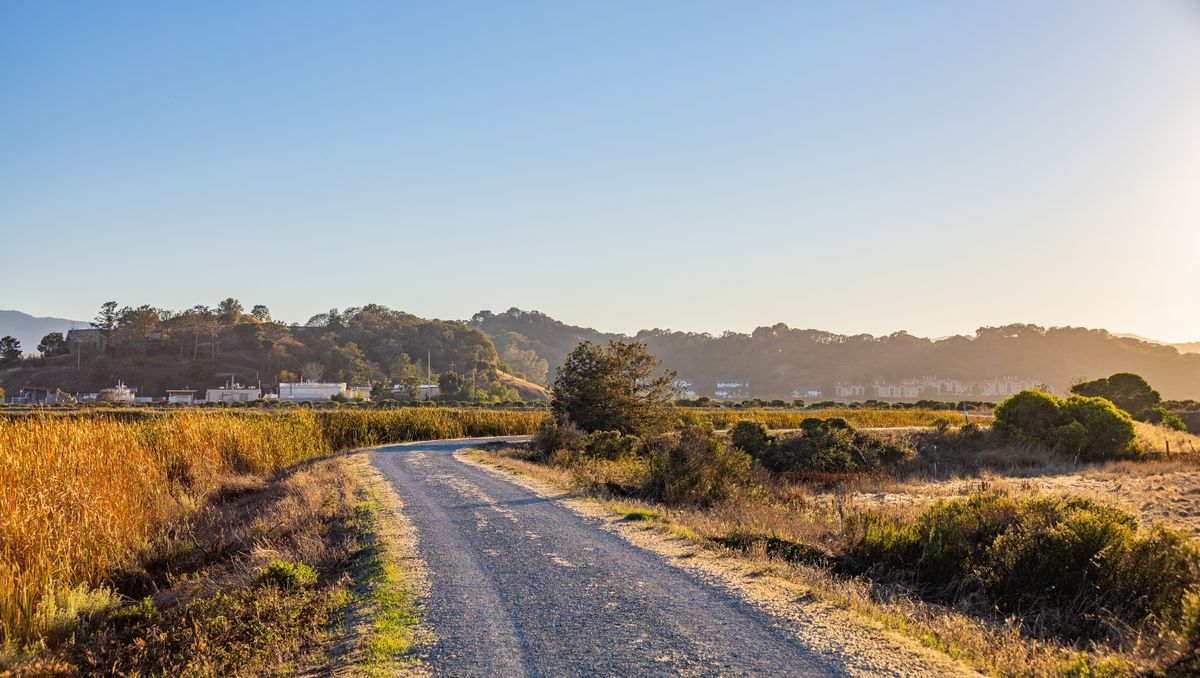
The one rule every state agrees on: walk-in means walk
Strip away the acronyms and all seven programs say the same thing: these are private farms and ranches opened to foot access for hunting. The truck stays on the road or in a designated spot. It does not go “just to the corner” down a field lane, and it does not idle in the CRP while you uncase the gun. Every agency puts it differently. None of them says yes.
What changes from state to state is the fine print: whether there are designated lots, what the signs look like, whether there’s a sign-in box at the parking spot, and how much the agency spells out about roadside parking. That’s where hunters get in trouble.
Seven-state vehicle and parking table
| State / program | What the agency says (vehicles & parking) | Not spelled out on pages reviewed → confirm |
|---|---|---|
| South Dakota: Walk-In Areas, CREP, CHAP | GFP: “NO DRIVING is allowed on Walk-In Areas except on designated trails and parking areas.” GFP’s Walk-In FAQ says Walk-In, CREP, and CHAP lands “are open to foot traffic only, unless there is a posted designated trail.” The Hunting & Trapping Handbook tells you to look for signs reading “Foot Traffic Only,” “Park Cars Here,” “No Vehicles Beyond this Point,” and “Designated Trail.” CHAP: complete the check-in registration slip and drop it in the self-service box. | Roadside-shoulder parking rules for a specific tract: confirm with GFP / posted signs. |
| South Dakota: COOP Management Areas | Driving on harvested fields only to place and retrieve waterfowl decoys; disabled-permit holders may drive to hunt any game; all other access is foot traffic only; no hunting while farm machinery is present. | Pheasant hunters: assume foot only and park as signed. |
| Nebraska: Open Fields and Waters (OFW) | NGPC: enrolled properties are accessed by walk-in only. “Driving vehicles on lands enrolled in OFW is prohibited except on trails specified by the landowner.” Tap individual sites in the interactive atlas for “pertinent regulations”; NGPC points hunters to the front pages of the Public Access Atlas for more OFW rules. State Recreation Areas: a park entry permit is required for each vehicle entering SRA lands, and hunting there is prohibited within 100 yards of public-use areas, parking lots included. | Where to park for a given OFW tract (roadside vs. lot): confirm in the atlas site notes / posted signs. |
| Kansas: WIHA / iWIHA | KDWP: WIHA and iWIHA lands “remain private property,” open for hunting only during each tract’s posted access period. Hunter responsibilities: “Keep roads, gates, and driveways clear; parking is limited.” Avoid farm equipment, homes, and areas marked with Safety Zone signs. iWIHA adds Go Outdoors Kansas check-in/check-out and a daily hunter cap: once it’s full, no more check-ins. | The live Where to Hunt page doesn’t restate a tract-driving rule. The program is walk-in by name, so stay on foot and confirm in the current Hunting Atlas / posted signs. |
| Iowa: IHAP | Iowa DNR: “Do not enter properties with vehicles. Do not open gates.” Allow a buffer around livestock and buildings; IHAP tracts are “for walk-in hunting only.” Signs mark the true boundary; tracts are patrolled by conservation officers. | Whether a tract has a designated parking spot or roadside only: confirm with Iowa DNR / posted signs. |
| North Dakota: PLOTS | NDGF PLOTS Guide: walk-in access means “traveling by foot.” Small-game proclamation: no motor-driven vehicles on Conservation PLOTS “without written permission from the landowner or as otherwise signed by the Department.” PLOTS courtesy list: “Do not block field approaches or gates with vehicles” and “Clean game well away from ditches and approaches.” State law (N.D.C.C. 20.1-01-07): while hunting small game other than waterfowl or cranes, no vehicle off an established road or trail without written landowner permission, and “for purposes of safety and allowing normal travel, a motor-driven vehicle may be parked on the roadside or directly adjacent to said road or trail.” On WMAs, vehicles are restricted to constructed roads, established trails, and parking areas used by passenger cars. | Tract-specific parking spots: confirm in the PLOTS Guide / posted signs. |
| Minnesota: Walk-In Access (WIA) | MN DNR: “Park along roads or in designated parking areas. Do not block access to farm fields or pastures. Be aware that during the fall, farm machinery will also be using roads. Give them as much space as possible to get around your parked vehicle.” “No motorized vehicles are allowed.” The WIA Code of Conduct: access parcels on foot only; “Park on the shoulder of a public road or in a designated parking area”; leave gates and fences as you found them. A WIA validation is required to access sites. | Of the seven, the most specific. Still check the WIA site-status page for closures. |
| Montana: Block Management (BMA) | FWP: “Each BMA has its own rules agreed upon by the landowner(s) and FWP,” including vehicle restrictions, game retrieval, boundaries, and camping. Type I BMAs use sign-in boxes or need no permission, and “some parking areas have vehicle limits.” Type II BMAs have permission issued by the landowner or FWP, often with reservations. Green signs: hunting allowed with restrictions such as written permission only, signing a roster, or “vehicles on established roads only.” Orange signs: closed to hunting or motorized travel. FWP warns of fire-danger closures: contact regional staff or landowners before the trip. | Parking for a specific BMA: read that BMA’s map and rules sheet. There’s no single statewide answer. |
Three states hand you explicit parking language: Minnesota (roads or designated areas, don’t block farm access, make room for machinery), North Dakota (don’t block approaches or gates; roadside parking allowed by statute for safety and normal travel), and Kansas (keep roads, gates, and driveways clear). South Dakota names its parking signs and its no-driving rule. Nebraska, Iowa, and Montana are emphatic about keeping vehicles off the land. Exactly where to park is left to atlas notes, BMA rules, and the sign at the gate.
Reading the parking signs
Agencies sign the ground, and the sign at the field edge beats the polygon on your phone every time.
- South Dakota: “Park Cars Here,” “No Vehicles Beyond this Point,” “Foot Traffic Only,” “Designated Trail.” If you see “Park Cars Here,” that’s the answer. Use it.
- North Dakota: PLOTS boundaries are marked with yellow triangular signs. NDGF says that if an area is listed as PLOTS but isn’t signed, err on the side of caution and check with the department before going in.
- Montana: green Block Management signs mean go, with conditions. Read them, because the condition might be “vehicles on established roads only” or “sign the roster.” Orange means closed to hunting or motorized travel.
- Kansas and Iowa: watch for Safety Zone markings around homes, buildings, and livestock. Iowa says safety zones are clearly marked; Kansas says avoid areas signed as Safety Zones.
- Minnesota and Nebraska: enrollment boundary signs mark the walk-in ground. Parking guidance lives on the DNR page and Code of Conduct (MN) and in atlas site notes (NE).
The night-before parking plan
You wouldn’t run a dog without a plan. Don’t run a truck without one. Do this on motel Wi-Fi, then download it for offline use (workflow in GPS and Offline Maps for Walk-In Days).
- Open the live agency atlas and confirm the tract is still enrolled for this season and date range (Kansas access windows vary by tract; Minnesota posts closures on its WIA status page).
- Switch to satellite view. Find the public road frontage, the field approach, and any obvious pull-off or lot. Note where the gate and the walk-in sign probably sit.
- Read the site notes. Nebraska atlas pop-ups, Montana BMA rules sheets, and the North Dakota PLOTS Guide carry property-specific rules. If there’s a designated lot or a Type I sign-in box, that’s your parking pin.
- Drop two pins, not one: where the truck goes, and where you step onto enrolled ground. They’re rarely the same spot.
- Pick a Plan B within a short drive. If the only legal pull-off is full, you leave. You don’t make a new spot. (More on that in Managing Pressure on Public Pheasant Land.)
- Check today’s status: Kansas iWIHA capacity, Montana fire restrictions, Minnesota WIA closures.
- Write the list on paper (road, tract ID, parking description) for when the phone dies in the shelterbelt.
Courtesy that isn’t law but keeps the program alive
None of the following is a statute we’re quoting. It’s the stuff landowners notice, and landowners renew contracts. Where an agency says something similar, we say so.
- Don’t block field approaches, gates, driveways, or mailboxes. North Dakota and Minnesota say this outright about approaches, gates, and farm access. Kansas says keep roads, gates, and driveways clear. Mailboxes are our addition: the carrier has a route too.
- Pull fully off only where the shoulder is firm and parking is legal. Midwest county shoulders can be soft, steep, or hiding a ditch. A truck half on the road is a hazard, and a truck sunk in the ditch is a story that travels. If a spot isn’t safe or legal, it’s not a parking spot.
- Harvest season is rush hour. In October, combines, grain carts, and semis run gravel roads with little room to spare. Minnesota DNR flags this directly. Park where a wide implement can still get by, and stay off hill crests, curves, and narrow bridge approaches where sight lines are short.
- Dry grass and hot exhaust don’t mix. Pulling a hot truck over tall, dry cover is a fire risk. Gravel or short grass is the better choice, especially in Montana fire-danger weeks.
- One spot, one party. If two trucks already fill the legal pull-off, the tract is taken this morning. Move on.
- Leave a dash card. A note on the dash with a first name, phone number, and “hunting the walk-in, back by 1 p.m.” tells a landowner, a deputy, or a game warden that you’re accounted for. Keep guns and valuables out of sight and lock up.
- Leave gates as you found them, or don’t touch them. Minnesota’s Code of Conduct says leave gates and fences as you found them. Iowa says don’t open gates on IHAP at all. When in doubt, climb carefully at a post rather than swing a gate you don’t own.
- Clean birds away from the road. North Dakota asks hunters to clean game well away from ditches and approaches. A pile of feathers at the field entrance is a bad business card. See Pheasant Cleaning and Field Care.
- Unload before you load up. North Dakota’s proclamation bars a cartridge in the chamber in or on a motor-driven vehicle while hunting. Check your state’s transport rules for the rest, and make an empty chamber at the tailgate a habit everywhere.
- Kennel the dog at the truck. Dogs loose on a county road are a hazard to themselves and to traffic. Leash or kennel until you’re past the sign. More in Hunting with a Dog on Public Land.
When the map shows nowhere to park
Some tracts front a road with no shoulder worth the name, or sit behind a locked gate with a farmstead next door. Your options, in order:
- Look for designated parking in the atlas notes or on-site signs (SD “Park Cars Here,” MT BMA parking areas, ND WMA lots, MN designated areas).
- Use a legal, safe roadside spot where the state allows it (Minnesota and North Dakota spell this out), and walk the road edge to the enrolled boundary.
- Approach from another side that has public road frontage, if the enrolled ground touches it.
- Skip it. There are a lot of walk-in acres in these seven states. A tract with nowhere legal to park is no place to improvise.
What you never do: drive a field lane past the walk-in sign, park in someone’s yard approach, or cross non-enrolled private ground to “get to the good side.” That last one is trespass, whatever your GPS says.
Seven-state quick links for parking questions
| State | Start here |
|---|---|
| South Dakota | GFP Hunting Areas · Walk-In FAQ (PDF) · Hunting & Trapping Handbook (PDF) |
| Nebraska | Open Fields and Waters · Public Access Atlas · Where to Hunt |
| Kansas | KDWP Where to Hunt (WIHA/iWIHA) |
| Iowa | Iowa DNR IHAP |
| North Dakota | NDGF PLOTS Guide · Small Game proclamation · WMA regulations |
| Minnesota | MN DNR Walk-In Access · WIA Code of Conduct (PDF) · WIA site status |
| Montana | FWP Block Management · How to Gain Access |
Featured gear (partner slots)
These stay empty until a real affiliate exists. We’re not inventing products tonight.
Name TBD · Why it matters: a parked truck on a dawn gravel road is hard to see · Who it's for: hunters who park on county shoulders in harvest traffic · Partner link coming
Name TBD · Why it matters: a note on the dash answers the landowner's question before he has to ask · Who it's for: anyone leaving a truck at a walk-in tract · Partner link coming
Related guides
- GPS and Offline Maps for Walk-In Days
- How to Read a Walk-In Map
- Managing Pressure on Public Pheasant Land
- Walk-In Access Explained
- South Dakota Walk-In Guide
- Nebraska Public Access Atlas Tips
- Kansas WIHA Pheasant Guide
- Minnesota WIA Validation Guide
- North Dakota PLOTS First-Week Rules
- First Aid and Truck Kit for Upland Days
State season stacks: SD · NE · KS · IA · ND · MN · MT.
Sources
- South Dakota GFP: Hunting Areas (Walk-In Areas: "NO DRIVING is allowed on Walk-In Areas except on designated trails and parking areas"; CREP description; CHAP check-in registration slip / self-service box; COOP decoy/disabled-permit driving exceptions, otherwise foot traffic only, no hunting while farm machinery present)
- South Dakota GFP: Walk-In Area FAQ (PDF) (Walk-In, CREP, CHAP lands open to foot traffic only unless there is a posted designated trail; working farms and ranches)
- South Dakota GFP: Hunting & Trapping Handbook (PDF) (signs: "Foot Traffic Only," "Park Cars Here," "No Vehicles Beyond this Point," "Designated Trail"; e-bikes prohibited on Walk-In/CREP/CHAP except roads or posted designated trails)
- Nebraska Game and Parks: Open Fields and Waters (walk-in only; driving prohibited except on trails specified by the landowner; hunting/trapping/fishing only)
- Nebraska Game and Parks: Public Access Atlas (interactive map site pop-ups carry pertinent regulations; atlas can change anytime)
- Nebraska Game and Parks: Where to Hunt (OFW rules in front pages of the Public Access Atlas; SRA park entry permit required for each vehicle; no hunting within 100 yards of public-use areas including parking lots)
- Kansas Department of Wildlife and Parks: Where to Hunt (WIHA/iWIHA remain private property; posted access periods; "Keep roads, gates, and driveways clear; parking is limited"; Safety Zone signs; iWIHA check-in/out and daily capacity)
- Iowa DNR: Iowa Habitat and Access Program (IHAP) ("Do not enter properties with vehicles. Do not open gates."; walk-in hunting only; buffer around livestock and buildings; signs are true boundaries; patrolled by conservation officers; Sept. 1–May 31)
- North Dakota Game and Fish: PLOTS Guide (walk-in access defined as traveling by foot; "Do not block field approaches or gates with vehicles"; clean game away from ditches and approaches; unsigned listed tracts: check with the department)
- North Dakota Game and Fish: Small Game proclamation (Section 29: no motor-driven vehicles on Conservation PLOTS without written landowner permission or as signed by the Department; no cartridge in the chamber in or on a motor-driven vehicle while hunting)
- North Dakota Century Code 20.1-01-07 (no vehicle off established road/trail while hunting small game other than waterfowl/cranes without written landowner permission; vehicle may be parked on the roadside or directly adjacent to the road or trail for safety and normal travel)
- North Dakota Game and Fish: WMA regulations (motorized vehicles restricted to constructed roads, established trails, and parking areas used by passenger cars)
- Minnesota DNR: Walk-In Access (park along roads or in designated parking areas; do not block access to farm fields or pastures; fall farm machinery on roads; no motorized vehicles; validation required)
- Minnesota DNR: WIA Code of Conduct (PDF) (foot access only; park on the shoulder of a public road or in a designated parking area; do not block farm access; leave gates and fences as found)
- Montana FWP: Block Management (fire-danger closures; contact regional staff / landowners) · How to Gain Access (each BMA has its own rules incl. vehicle restrictions; Type I sign-in boxes, some parking areas have vehicle limits; Type II permission/reservations; green vs. orange signs)
- Photo: "Gravel Rural Road" by Robert So via Pexels (Pexels License)
- On this site: GPS and Offline Maps · How to Read a Walk-In Map · Managing Pressure · Walk-In Access Explained · Cleaning and Field Care · Hunting with a Dog on Public Land