Late-October Cover Shifts: Where Roosters Go After Harvest
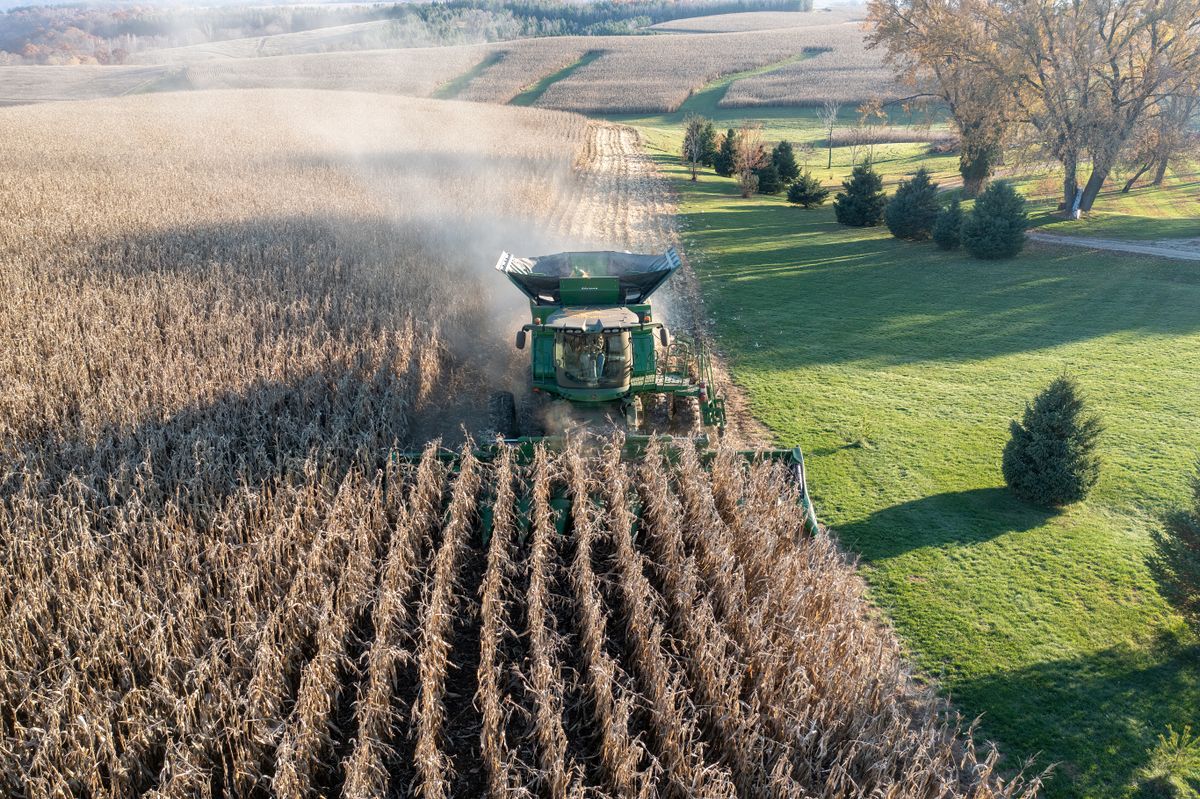
Early October, a rooster has a thousand acres of standing corn to disappear into, and he uses every one of them. Then the combines roll. In a week, sometimes a weekend, the hiding place the size of a county turns into stubble you can see a mouse cross. The birds don’t leave the country. They move, and they move to places you can actually walk.
That’s the gift of late October. The landscape gets smaller, the cover gets more honest, and the hunter who understands where a pheasant goes when its living room gets mowed has the best two or three weeks of the season in front of him. This page covers that shift across South Dakota, Nebraska, Kansas, Iowa, North Dakota, Minnesota, and Montana: what the agencies say about pheasant cover through fall, how harvest rearranges it, and how to rebuild your day around the new map.
Pair it with Mid-Season Scout Notes After Opener Week, Weather and Pheasant Movement, Shelterbelt and Tree-Row Pheasant Tactics, CRP and Pheasant Habitat Basics, Managing Pressure on Public Pheasant Land, and Late-Season Pheasant Tactics.
Who’s actually open in late October (2026)
Late October is a staggered month. Some states are two weeks deep, some are about to open, and Kansas is still waiting. Know which clock you’re on before you plan around harvest.
| State | Regular season (2026–27) | Where it stands, Oct. 20–31 | Hours to keep straight |
|---|---|---|---|
| North Dakota | Oct. 10, 2026 – Jan. 3, 2027 | Open. Nonresident first-week restriction on WMAs and PLOTS ended after Oct. 16. | 30 min before sunrise to sunset |
| Minnesota | Oct. 10, 2026 – Jan. 3, 2027 | Open. Bag is 2 daily / 6 possession through Nov. 30. | 9 a.m. to sunset |
| Montana | Oct. 10, 2026 – Jan. 1, 2027 (residents) | Open. Nonresidents on public and access-program land from Oct. 20. | ½ hr before sunrise to ½ hr after sunset (confirm Upland PDF) |
| South Dakota | Oct. 17, 2026 – Jan. 31, 2027 (traditional) | Open; first weekend’s crowds thinning. | 10 a.m. Central to sunset, statewide |
| Nebraska | Oct. 31, 2026 – Jan. 31, 2027 | Youth weekend Oct. 24–25; regular opener Oct. 31. | Confirm in the Small Game guide |
| Iowa | Oct. 31, 2026 – Jan. 10, 2027 | Youth weekend Oct. 24–25; regular opener Oct. 31. | 8 a.m. to 4:30 p.m. |
| Kansas | Nov. 14, 2026 – Jan. 31, 2027 | Closed. Youth/disability Nov. 7–8. Use late October to scout harvest progress. | ½ hr before sunrise to sunset |
Bags and the rest of the fine print live on the state pages: SD · NE · KS · IA · ND · MN · MT.
For Nebraska and Iowa hunters, this matters more than anywhere: your opener lands right in the thick of harvest. Some years the corn is mostly out by Oct. 31 and the birds are already pinned to grass and cattails. Other years half of it is still standing and roosters have a fortress next door. Same calendar, completely different hunt. Check the crop report the week before.
What the agencies say pheasants need in fall
Before you can predict where a bird goes, it helps to know what he’s looking for. North Dakota Game and Fish lays out the seasonal needs plainly in its habitat guide:
- Roosting and escape cover (September through April): dense tall shrubs and hedges, dense herbaceous cover, cattail wetlands, weed-grown fence lines, and small farmland woodlots, located near the places birds feed.
- Thermal or winter cover (October through March): dense herbaceous and woody vegetation; NDGF notes cattails are preferred winter habitat, and that pheasants roost safely in shrubs. Trees aren’t required.
- Food (year-round): waste grain, forbs, grass seeds, fruits. NDGF notes corn and soybeans provide food “during late fall until snow gets too deep.”
- Home range: about one square mile in a season, though birds may move up to 10 miles to reach winter cover.
That last point is the whole reason this page exists. A one-square-mile bird doesn’t vanish when his cornfield does. He shifts within that square mile to the next-best cover, and that cover is usually something you can walk.
Minnesota DNR’s hunting tips describe the daily rhythm that rides on top of all this: birds feed in grain fields in the morning, move by mid-morning to “the densest, thickest cover they can find, such as standing corn, federal Conservation Reserve Program (CRP) fields, brush patches, wetlands or native grasses,” and come back out to feed in late afternoon. Take standing corn off that list and watch where the arrow points.
The harvest shuffle: where roosters land
Here’s the pattern, in the order you’ll usually see it. Think of it as the cover that’s left once the easy hiding is gone.
1. Standing corn stays the fortress until it falls
As long as a big block of corn stands, it’s the best place in the county to be a pheasant. Minnesota DNR is blunt about it: it’s “next to impossible” for a group of two or three to work large fields of standing corn, because birds run. Iowa DNR says the same about big blocks of standing corn, cattail marshes, shelterbelts, and large waterways: hard for one hunter to cover. Unless you have a large, disciplined party and permission, don’t fight the corn. Hunt the grass beside it. MN DNR specifically names “grassy areas near standing corn or soybean fields” as good spots.
2. Fresh stubble empties fast, but the edges load up
The first day after harvest, birds may still feed in the stubble at first and last light, because waste grain is right there. By mid-morning there’s nowhere to hide in a picked field, so they move to the closest dense cover. That means the fence line, ditch, waterway, or grass strip touching freshly picked ground is often the best ten minutes of your morning. Work it into the wind and post a blocker at the end if your party is big enough to do it safely.
NDGF also notes that tall stubble (12 to 15 inches or more, as left by stripper headers) can provide some food and cover. Where you see tall stubble next to cattails, don’t drive past it.
3. CRP and native grass become the living room
With the crops gone, grass is the biggest block of concealment left on most walk-in maps. Dense CRP, native warm-season grass, and grassy waterways soak up displaced birds. Two habits help: hunt the side of the grass block nearest the food (the picked field), and go deeper on cold, windy days. MN DNR: “the nastier the weather, the deeper into cover the pheasant will go.” Habitat literacy lives in CRP and Pheasant Habitat Basics.
4. Cattails and wet edges start to matter
Late October is when cattail sloughs go from “maybe” to “must.” NDGF calls cattails preferred winter habitat, and MN DNR describes pheasants spending part of the year in cattail marshes near grain fields. The ones that pay are close to picked corn or beans. Food on one side, a wall of cattails on the other, and a rooster has everything he needs within a few hundred yards. Dogs earn their keep here; the wet, matted edges are where a running bird finally sits tight.
5. Woody cover holds birds, but don’t skip the grass for it
Shelterbelts, plum thickets, weedy fence rows, and small woodlots hold birds after harvest, especially on raw, windy days. But NDGF points out that South Dakota studies found pheasants used tree cover heavily mainly at the end of severe winters, and hens were otherwise much more likely to use cattails, tall grass, and food plots. In late October, treat the trees as one stop on the loop, not the whole plan. Tactics: Shelterbelt and Tree-Row Pheasant Tactics.
6. Food plots and unpicked strips are magnets
Where a landowner or program leaves standing strips of corn or sorghum next to winter cover, birds find them. NDGF recommends exactly that layout: rows of standing crop beside permanent winter cover, ideally within a quarter mile. If a walk-in or WMA map shows a food plot butting into grass or cattails, that’s a parcel worth the drive once the surrounding crops are out.
Rebuilding your day around the new map
Harvest changes the hunt by the hour, not just by the week. A plan that holds up:
| Time | Where to be | Why |
|---|---|---|
| Legal open (state-dependent) | Grass and fence lines touching freshly picked fields | Birds are still feeding or just leaving the food. Watch your state’s start time: 9 a.m. in MN, 10 a.m. Central in SD, 8 a.m. in IA. |
| Mid-morning to mid-afternoon | Dense CRP interiors, cattail sloughs, wet edges, shelterbelts | Birds have left the open stubble for the thickest cover nearby |
| Last hour | Back to the edges between cover and picked grain | Birds come back out to feed; MN DNR calls the first and last hours “consistently the best” |
| Iowa only | Plan your walk-out so you’re done by 4:30 p.m. | Iowa’s shooting hours end at 4:30. The evening feeding window is mostly outside legal hours. |
A few habits that pay this time of year:
- Drive with your eyes, hunt with your feet. Note which fields came out since your last trip. A walk-in parcel that was useless next to standing corn last week may be the best one on the map this week. Scouting from the road is fine; hunting from it isn’t. Road right-of-way rules vary, so check your state’s regs.
- Watch the combines, then give them room. Harvest is a farmer’s busiest week of the year. Park clear of field approaches and give machinery the road, as Minnesota DNR asks walk-in hunters to do. More: Finding Parking on Walk-In Tracts.
- Never hunt where the work is happening. South Dakota’s COOP areas bar hunting while farm machinery is present, and Kansas WIHA asks hunters to steer clear of farm equipment. That’s good practice everywhere: wait, or go to the next parcel.
- Add one cattail parcel to every day’s list. It’s the cover type that gets more valuable each week from here to January.
- Log it. Which fields were picked, where birds flushed, wind, time. Template: Mid-Season Scout Notes.
Safety when the cover shrinks
Smaller cover means tighter groups and more birds flushing low across fence lines and ditches. Settle zones of fire before every push, keep the line even, and never swing on a low bird toward a blocker or the road. Blaze is required above the waist in Minnesota and at least 50% solid blaze is required in Iowa; recommended everywhere else. Details: Blaze Orange Requirements by State. Youth and mentor habits: Youth Hunter Safety.
Featured gear — partner slots
Empty until a real partner exists. We don’t recommend products we haven’t vetted.
Name TBD · Why it matters: cattails and plum thickets shred regular pants by November · Who it's for: hunters following birds into wet, woody cover · Partner link coming
Name TBD · Why it matters: slough edges are wet even when the grass isn't · Who it's for: dog handlers working cattails and wet CRP · Partner link coming
Official verify links
| What | Where |
|---|---|
| Harvest progress by state (weekly) | USDA NASS Crop Progress |
| Pheasant seasonal cover needs | NDGF — Habitat Needs of Pheasants |
| Daily movement and cover tips | MN DNR — Pheasant hunting tips · MN DNR — Hunting pheasants |
| Seasons and hours | GFP pheasant · NGPC Hunting Seasons · KDWP When to Hunt · Iowa Hunting Seasons · NDGF pheasant · MN DNR pheasant · MT FWP Upland |
Related
- Mid-Season Scout Notes After Opener Week
- Weather and Pheasant Movement
- Shelterbelt and Tree-Row Pheasant Tactics
- CRP and Pheasant Habitat Basics
- Managing Pressure on Public Pheasant Land
- Hunting Pheasants Without a Dog
- Late-Season Pheasant Tactics
- Finding Parking on Walk-In Tracts
Sources
- North Dakota Game and Fish — Habitat Needs of Pheasants (roosting/escape cover Sept.–April incl. cattail wetlands, weedy fence lines, small woodlots; thermal cover Oct.–March; cattails preferred winter habitat; corn and soybeans as late-fall food until deep snow; ~1 sq. mi. seasonal home range, up to 10 mi. to winter cover; SD studies on tree-cover use in severe winters; tall stubble 12–15"+; standing crop strips beside winter cover; food plots within ¼ mi. of winter cover)
- Minnesota DNR — Pheasant hunting tips (morning feeding in grain; mid-morning move to standing corn, CRP, brush, wetlands, native grass; standing corn "next to impossible" for 2–3 hunters; "the nastier the weather, the deeper into cover"; first and last shooting hours best)
- Minnesota DNR — Hunting pheasants (transition areas; grassy areas near standing corn or soybeans; walk in a line for safety)
- Iowa DNR — Ring-Necked Pheasant brochure (standing cornfields, cattail marshes, shelterbelts, large waterways hard for one hunter; blockers for running birds)
- USDA NASS — National Crop Progress (weekly harvest progress by state; no figures quoted here)
- Season dates, hours, and bags as carried on this site's Opener Weekend Survival Guide and Mid-Season Scout Notes, from GFP, NGPC, KDWP, Iowa DNR, NDGF, MN DNR, and MT FWP pages (re-confirm live)
- SD COOP no-hunting-with-machinery and KS WIHA farm-equipment guidance as cited on Finding Parking on Walk-In Tracts