Pushers and Blockers: Safe Small-Party Drives
A pheasant drive is not a cavalry charge. It is a short, quiet conversation among three or five people about who walks, who waits, and who owns which slice of sky. Done well, it puts birds into the air where someone can take an honest shot. Done poorly, it puts a blocker in front of a swinging muzzle, or a dog between a gun and a low rooster. This page is the teach-level version for DIY parties on Midwest walk-in and public ground—South Dakota, Nebraska, Kansas, Iowa, North Dakota, Minnesota, and Montana—not a lodge brochure.
Pair it with Shelterbelt and Tree-Row Tactics, Youth Hunter Safety for Pheasant Season, Hunting Pheasants Without a Dog, Managing Pressure on Public Pheasant Land, Blaze Orange Requirements by State, Hunting with a Dog on Public Land, Late-October Cover Shifts, and First Aid and Truck Kit for Upland.
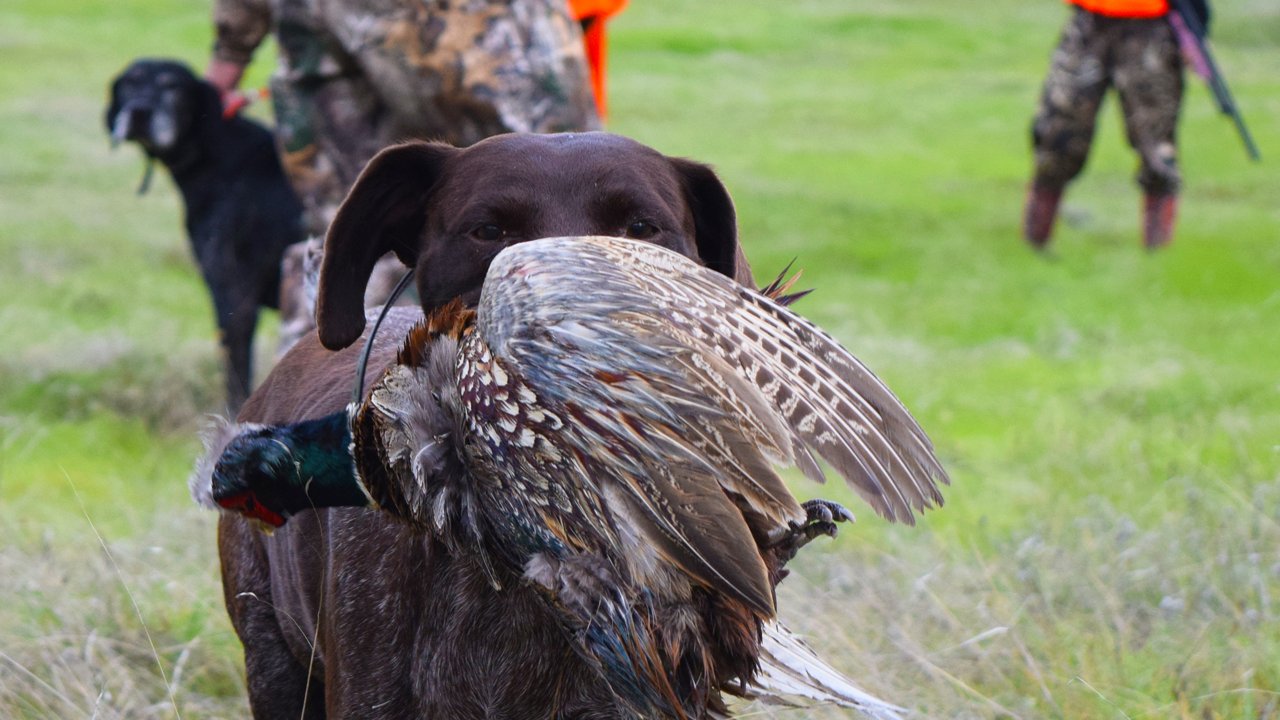
What a push/block drive is (and is not)
Three common ways to hunt the same strip of cover:
| Style | How it works | Best when | Safety note |
|---|---|---|---|
| Solo / small wander | One or two hunters work edges, pause often, hunt the wind | Thin cover, unknown tracts, high public pressure | Fewest gun angles; still need blaze and a clear backstop |
| Walking line | Two to four hunters abreast through grass or CRP | Open blocks with a clear far edge and no blocker needed | Classic hunter-ed zone-of-fire problem: stay abreast and in sight |
| Push / block | Pushers walk cover toward blockers already posted on the escape edge | Shelterbelts, cattail tips, CRP that empties into a ditch or stubble | Blockers wait with muzzles safe; birds often curl back over the push line |
A pusher walks the cover and moves birds. A blocker stands or kneels at the far end—usually the escape tip, downwind edge, or food-edge exit—and waits for birds that run or flush out the end rather than back over the line. Shelterbelt tactics on this site already say it bluntly: place the blocker before the push starts, and skip the block if the party has no shared plan (Shelterbelt and Tree-Row Tactics).
This is literacy, not marketing. You do not need a dozen paid guns and a guide radio net. You need enough people to cover the strip safely, a plan spoken out loud at the truck, and the discipline to abort when the geometry goes wrong.
Roles: pushers, blockers, and who may shoot
Before anyone steps off, name the roles and the lanes.
- Pushers keep a straight line, stay in sight of one another, and shoot only in their own front zone. When a bird flushes back over the line—or skims low with a dog under it—that bird is not a shot. It is a bird for next time. Youth-safety habits on this site call that low bird, no bird for a reason (Youth Hunter Safety).
- Blockers arrive first, get set, and stay put. Their job is visibility and patience. Muzzles point up or into safe dirt, never across the approaching line. Finger off the trigger until a bird is identified in their lane with a clear beyond.
- When blockers may shoot: only at birds that clear the escape edge into their agreed zone, with sky or open ground behind the bird and no pusher, dog, or road in the line of fire. A rooster that flares back toward the pushers is not the blocker’s bird.
- Birds flushing back over the line belong to the pushers only if the bird is high enough and squarely in that hunter’s zone. If you cannot see sky under it, do not shoot. If you lose track of a partner, stop the line.
Nebraska Game and Parks puts the party rule in one sentence on its Hunt Safe Tips page: know where everyone in your party is, establish shooting lanes, and do not swing outside your safe zone of fire—stay in constant communication. That is the whole drive, compressed.
Zones of fire (hunter-ed language, not invented statutes)
Hunter education across the Midwest teaches the same geometry. We cite it as safety practice. We are not claiming a separate “drive angle” statute unless an agency text says so.
Montana Fish, Wildlife & Parks requires field-day students to demonstrate zones of fire along with obstacle crossings, vehicle load/unload, and shoot/don’t-shoot calls (FWP Hunter Education). Standard hunter-ed study material used in Montana’s online course describes a safe zone of fire as about 45 degrees directly in front of each hunter when people walk abreast, spaced roughly 25 to 40 yards apart and always in sight of one another (Montana hunter-ed: Determining Your Safe Zone-of-Fire). The same 45-degree / walk-abreast frame appears in Iowa’s hunter-ed study guide (Iowa hunter-ed: Determining Your Safe Zone-of-Fire).
Iowa DNR’s public Learn to Shoot page restates the four habits every drive depends on:
- Treat every firearm as if it is loaded.
- Always keep the firearm pointed in a safe direction.
- Always keep your finger off the trigger until ready to fire.
- Always know your target and what is beyond it.
South Dakota Game, Fish and Parks opens its 10 Commandments of Mentored Hunting with the same core: treat every firearm as loaded, practice muzzle control, and be absolutely sure of the target.
Drive translation:
- Agree lanes at the truck. Point them. Say them.
- Pushers stay abreast. Ragged lines put someone in front of a muzzle—stop and straighten.
- Blockers’ zones face away from the push, into the escape.
- Changing position changes everyone’s zones. Iowa hunter-ed language is explicit: do not leave a stand or lane without telling the rest of the party, because your move redraws their safe fire.
- Target fixation is real. If you cannot see whether the beyond is clear—partners, dog, road, farmstead—do not shoot.
Spacing numbers from hunter-ed (about 25–40 yards abreast) are teaching guidance, not a Midwest-wide legal spacing rule for pheasant drives. Adjust for cover height and visibility. Tighter in tall CRP if you can still see hats; never so tight that a swing crosses a neighbor.
Party size, spacing, and communication (advice)
Labeled as advice unless an agency page says otherwise:
- Too few people for the cover is worse than walking it as a line. A half-mile cattail marsh with two guns and one “blocker” somewhere in the fog is not a drive. Shrink the piece or skip the block.
- Three to five is a common DIY size for a shelterbelt, plum thicket, or short CRP tongue. Bigger parties need more lane talk, more blaze, and more patience when someone falls behind.
- Radios or whistles help when the far tip is out of voice range. Agree codes before you split: “bird left,” “dog ahead,” “hold,” “unload.” Silence is not a plan.
- Stop the drive if you lose visual contact with a pusher or blocker. Find them. Then restart.
None of that replaces the four rules. It is how a small party keeps those rules alive when the cover is tall.
Dogs in a drive
A dog is not a free agent in a push/block. It is another moving body in the geometry.
- Cast the dog with the pushers, not on a sprint past the blockers into the escape tip before the line is set.
- Blockers should assume a dog may appear with a bird. Muzzles stay safe until the retrieve is clear.
- Soft link for manners on leased and public ground: Hunting with a Dog on Public Land · E-Collars and Whistles for Upland · Pheasant Dog Gear Checklist.
- No dog? Shorter strips, slower pauses, and a blocker who watches the exit tip still work—Hunting Pheasants Without a Dog.
Walk-in and public-land etiquette
A drive on Walk-In / WIHA / PLOTS / OFW / WIA / IHAP / BMA ground is still a hunt on someone else’s map pin.
- Do not drive another party’s parking tract. If trucks already own the pull-off on a small parcel, leave. Cutting off someone else’s push by racing to the far tip is classic bad manners (Shelterbelt tactics; Public-land pressure).
- Leave room at the lot. Park legal; never block gates or farm access—Finding Parking on Walk-Ins.
- One thorough push, then move. Hammering the same belt educates birds and crowds the next truck.
Blaze orange in a multi-gun line
Visibility is the cheapest safety gear you will ever buy. State rules differ; the full table lives on Blaze Orange Requirements by State. Two hard “yes” states for pheasant:
- Iowa: To hunt pheasant (and other listed upland birds) you must wear at least one visible external article—hat, cap, vest, coat, jacket, sweatshirt, sweater, shirt, or coveralls—with at least 50% of its surface area solid blaze orange (Iowa Code §481A.122; Iowa DNR pheasant hunting).
- Minnesota: Pheasant hunters must wear at least one visible blaze orange or pink article above the waist (hat, jacket, or vest). Rules tighten further when a firearms/muzzleloader deer season is open (MN DNR pheasant; MN DNR blaze clothing).
Elsewhere in our footprint, orange is often recommended rather than required for upland—South Dakota advises it for youth hunts; Nebraska’s hunt-safe tips urge blaze even when not legally required; Montana’s upland regs strongly recommend at least a hunter-orange hat. On a multi-gun drive, wear more than the minimum. Hats and vests read across tall CRP when a blocker is looking back into the sun.
Fences, ditches, and the truck when roles rotate
Montana’s field day grades obstacle crossings and loading/unloading at vehicles because that is where careless habits show. Make the same habits automatic on a drive:
- Open the action before every fence or ditch. Hand the gun across, action open; climb; take it back.
- Unload before the gun goes into a vehicle, rack, or case. Rotate blockers by walking, not by bouncing a loaded gun to the far tip in a truck bed.
- At the truck between pushes: empty chambers, clear plan, then reload when the next line is set.
When not to drive
Skip the push/block—and hunt a smaller strip or walk a simple line—when:
- Too few people for the cover you are looking at.
- Thick unknown cover with no safe backstop, no clear escape edge, or farmsteads/roads in the likely swing.
- Another party already owns the tract—their trucks, their dog bells, their push in progress.
- Nobody can state the lanes out loud. If the plan is vague at the tailgate, it will be dangerous in the grass.
- Wind, fog, or light that kills visibility between pushers and blockers.
A bird left in the field is a better outcome than a swing into a partner. Season dates, hours, and bags still come from the live agency booklet for the morning you hunt—not from this page.
Featured gear — partner slots
Empty until a real affiliate exists. Blaze and communication matter more than brand names tonight.
Name TBD · Why it matters: blockers and pushers have to find each other before they find birds · Who it's for: any small party running a drive · Partner link coming
Name TBD · Why it matters: voice dies at the far tip of a shelterbelt; a short code does not · Who it's for: three-to-five person DIY parties · Partner link coming
Related
- Shelterbelt and Tree-Row Pheasant Tactics
- Youth Hunter Safety for Pheasant Season
- Blaze Orange Requirements by State
- Managing Pressure on Public Pheasant Land
- Finding Parking on Walk-In Tracts
- Hunting Pheasants Without a Dog
- Hunting with a Dog on Public Land
- Late-October Cover Shifts
- First Aid and Truck Kit for Upland
Sources
- Montana FWP Hunter Education (field day requires proficiency in zones of fire, four main firearm-safety rules, trail carries, obstacle crossings, loading/unloading from vehicles, handing off firearms, and shoot/don’t-shoot scenarios)
- Montana hunter-ed study guide: Determining Your Safe Zone-of-Fire (walk abreast; about 25–40 yards apart; stay in sight; ~45° zone directly in front of each hunter)
- Iowa hunter-ed study guide: Determining Your Safe Zone-of-Fire (same walk-abreast / ~45° framing)
- Iowa DNR Learn to Shoot — Firearm Safety Tips (treat as loaded; muzzle in a safe direction; finger off the trigger; know the target and beyond)
- Iowa DNR Hunter Education & Safety (4 Basic Rules framing)
- Nebraska Game and Parks — Hunt Safe Tips (know where everyone is; establish shooting lanes; do not swing outside the safe zone of fire; constant communication; wear blaze even when not required; muzzle control; treat every firearm as loaded)
- South Dakota GFP — Mentored, Youth and Apprentice (10 Commandments of Mentored Hunting: treat every firearm as loaded, muzzle control, sure of the target)
- South Dakota GFP Hunt SAFE Lesson 1 PDF (Ten Commandments of Firearm Safety, including muzzle direction, treat as loaded, sure of target/front/behind, finger outside trigger guard, unload before crossing fences/obstacles)
- Iowa Code §481A.122 (upland hunters: ≥1 visible external article at least 50% solid blaze orange)
- Iowa DNR Pheasant Hunting (blaze requirement for pheasant/quail/gray partridge/ruffed grouse)
- Minnesota DNR Pheasant hunting (at least one visible blaze orange or pink article above the waist)
- Minnesota DNR Blaze clothing requirements (small-game and firearms deer-season clothing rules)